

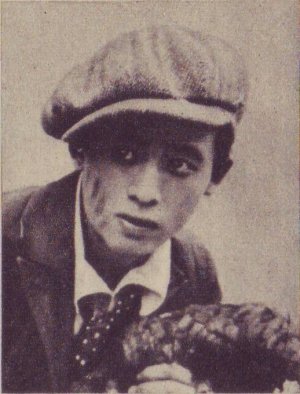
Inagaki Hiroshi
- Name: Inagaki Hiroshi
- Native name: 稲垣浩
- Also Known as: いながき ひろし
- Nationality: Japanese
- Gender: Male
- Born: December 30, 1905
- Died: May 21, 1980
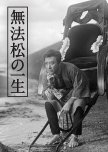
Inagaki’s liberal attitudes also led him to produce some unusual films during the thirties and forties: A Thousand and One Nights on the Road (Matatabi sen’ichiya, 1936) transposed Frank Capra’s It Happened One Night (1934) to Japan and apparently supported the common man against the authorities, while The Sea-Crossing Festival (Umi o wataru sairei, 1941), an allegory about the infiltration of a port town by a group of sinister horsemen, has been described by Motohiko Fujita as “the last representative of the liberal spirit in Japanese film until the end of the war.” Even as late as 1943, The Life of Matsu the Untamed (Muhō Matsu no isshō), scripted by fellow liberal, Mansaku Itami, eschewed propagandistic elements in favor of subtle personal drama. In this story of a rickshaw driver’s relations with a widow and her young son, Inagaki elicited a marvelously detailed performance from Tsumasaburō Bandō, and created a delicate balance between humor and poignancy. The result was one of the finest and most moving films produced during the war years.
After the war, Inagaki won international acclaim, including an Academy Award, for his Musashi Miyamoto trilogy (Miyamoto Musashi, 1954–56), distributed in the West as Samurai. This was a well-made but academic remake, starring Toshirō Mifune, of his 1940s film sequence of the same name. His 1958 version of The Life of Matsu the Untamed, again with Mifune, also earned foreign distribution as The Rickshaw Man; though virtually a shot-for-shot remake, it lacked the power and humanity of the original. With Life of a Swordsman (Aru kengō no shōgai, 1959), Inagaki transposed the Cyrano de Bergerac story to the beginning of the Tokugawa era, but in fact some of his most interesting postwar films were set in more recent times. Children Hand in Hand (Te o tsunagu kora, 1948), based, like The Life of Matsu the Untamed, on a Mansaku Itami script, was a compassionate and engaging account of the experiences at school of a child with learning difficulties, a subject that might have appealed to Hiroshi Shimizu. Storm (Arashi, 1956), based on a novel by Tōson Shimazaki, was a delicate and beautifully acted Taisho-era story about a widower bringing up his young sons. Geisha in the Old City (“Kottai-san”yori:Nyotaiwakanashiku, 1957) was a complex account of the relationships within a Kyoto geisha house, shot in exquisite color. In its perceptive use of social changes in the old capital as a microcosm of Japan’s postwar evolution, it resembled Kōzaburō Yoshimura’s postwar work, which it almost rivaled for quality.
In the last years of his career, Inagaki continued to produce expertly crafted films in a traditional idiom. Among these, his version of the much-filmed Chūshingura story (1962) was rather pedestrian; but his last big-budget film, Samurai Banners (Fūrin kazan, 1969), a heroic epic chronicling the unification of Japan into a nation state, was given a certain poignancy by the performance of Toshiko Sakuma as the princess whose happiness is sacrificed on the altar of national unity. By the seventies, Inagaki was judged old-fashioned and found himself unemployed. It was an ironic fate, since the last film he directed, Ambush (Machibuse, 1970), had a distinctly modern tone of absurdism, reminiscent of a spaghetti Western: the hero protects the inhabitants of a besieged teahouse before learning that he was hired to fight for the other side. However, Inagaki’s last contribution to the cinema was nostalgic: in 1978, in collaboration with silent film enthusiast Shunsei Matsuda, he served as producer of a modern silent chanbara, The Worms of Hell (Jigoku no mushi). In recalling the tone of his earliest work, this emphasized the classical consistency of his approach to filmmaking.
(Source: A Critical Handbook of Japanese Film Directors) Edit Biography
Screenwriter
| Title | Rating |
|---|---|
| 0.0 |
Director
| Title | Rating |
|---|---|
| 8.2 | |
| 7.4 | |
| 7.5 | |
| 7.0 | |
| 1.0 | |
| 6.0 | |
| 0.0 | |
| 2.0 | |
| 0.0 | |
| 0.0 | |
| 3.0 | |
| 6.9 | |
| 2.0 | |
| 0.0 | |
| 0.0 |

Screenwriter & Director
| Title | Rating |
|---|---|
| 7.1 | |
| 0.0 | |
| 7.2 | |
| 7.5 | |
| 7.5 | |
| 8.0 | |
| 7.8 | |
| 7.8 | |
| 7.6 | |
| 0.0 | |
| 0.0 | |
| 7.3 | |
| 4.0 | |
| 0.0 | |
| 0.0 | |
| 0.0 | |
| 0.0 |



Original Creator
| Title | Rating |
|---|---|
| 0.0 |
Movie
| Title | Rating |
|---|---|
Jizo Kyo Yurai
Japanese Movie, 1926,
(Support Role)
|
0.0
|
Samidare Soshi: Benigara
Japanese Movie, 1924,
[Little boy, Takushin]
(Support Role)
|
0.0
|
Jigoku no Buyo
Japanese Movie, 1923,
(Unknown)
|
0.0
|
Ore no Shorisa
Japanese Movie, 1923,
(Unknown)
|
0.0
|
TV Show
| Title | Rating |
|---|---|

Kohaku Uta Gassen
Japanese TV Show, 1951, 76 eps
[Judge] (Ep. 9)
(Guest)
|
7.6
|
Trending Articles

Top 9 C-drama female warriors every Mulan fan should know
If you're a Mulan fan looking for your next favorite warrior heroine, here are some C-dramas you'll want on your watchlist

Zhao Lusi to make her directorial debut with her upcoming drama
Youku unveiled its 2027 lineup, officially announcing the drama 'Farewell Letter'
Jing Bo Ran says 'The Early Spring' is his first true 'idol drama', shares insights into character styling
Jing Bo Ran opens up about his acting journey, styling Luan Nian in 'The Early Spring', and the roles that have shaped him as an actor
Chinese AI actress Fang Taozi rises to fame as virtual stars enter commercial market
"Virtual beings" are now evolving from mere characters on screens into a business that can be assigned a market value

Park Jin Young and Jeon So Young offered roles in new historical K-drama
Park Jin Young and Jeon So Young could be joining a new historical drama!
Top 12 upcoming dramas on every fan's watchlist
From highly anticipated adaptations to gripping thrillers, the upcoming drama lineup has something for every fan. With teasers already dropping, these 12 dramas are generating plenty of buzz even before their premieres. Here are the titles to keep on your

Chinese drama 'The Early Spring' to get a follow-up
Youku officially announces 'Midsummer Clear Skies' (literal title), a follow-up to 'The Early Spring'


